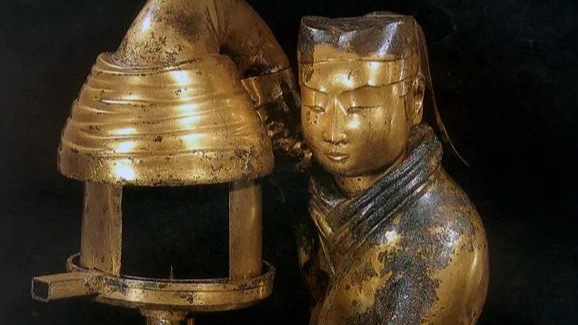
Changxin Palace Lamp
Introduction
The "Changxin Palace Lamp" is an iconic artifact from the Western Han Dynasty (206 BC-AD 24) that exemplifies the advanced craftsmanship and artistic expression of ancient China. Unearthed in 1968 from the tomb of Dou Wan, the wife of King Jing of the Zhongshan state, this remarkable piece has fascinated historians and art enthusiasts alike for its innovative design and historical significance. The lamp, currently housed in the Hebei Museum, stands as a testament to the intersection of practicality and artistry in ancient Chinese culture.
Design and Functionality
Standing at 48 centimeters high, the Changxin Palace Lamp is crafted from gilded bronze and ingeniously designed in the form of a kneeling maid holding a lamp. This design not only serves an aesthetic purpose but also fulfills a practical function. The lamp's construction includes a hollow sleeve through which smoke from the candle rises, effectively trapping soot inside the maid's body, thus preventing air pollution. This feature illustrates the sophisticated level of environmental consideration and technological innovation during the Han Dynasty. The lamp can be dismantled into several pieces, allowing for convenient cleaning, which further highlights the attention to detail in its design.
Historical and Cultural Significance
The Changxin Palace Lamp is inscribed with 65 characters, revealing details about its owner and providing a glimpse into the life of Chinese aristocracy over 2,000 years ago. The lamp not only sheds light on the daily life and technological advancements of the Western Han Dynasty but also serves as a cultural bridge, illustrating the aesthetic values and material culture of the time. As an object of both beauty and utility, the lamp represents the harmonious blend of art and science that characterized much of ancient Chinese craftsmanship.
International Recognition
The Changxin Palace Lamp gained international acclaim during the Exhibition of Archaeological Finds of the People's Republic of China, which toured 24 venues in 15 countries from 1973 to 1978. This exhibition marked the first Chinese archaeological display overseas since the founding of the People's Republic of China in 1949 and attracted over 6.5 million visitors worldwide. The lamp was one of the star attractions, symbolizing the prosperity and sophistication of ancient Chinese civilization to a global audience, and played a pivotal role in reshaping Western perceptions of China.
Media and Popular Culture
In recent years, the Changxin Palace Lamp has been featured in various media endeavors that aim to bring cultural relics into the modern spotlight. It was included in the documentary series "Every Treasure Tells a Story" and the TV variety show "Nation's Greatest Treasures," both of which highlight the narrative and cultural significance of China's historical artifacts. These programs have successfully captured the imagination of younger audiences, showcasing the lamp not merely as an ancient artifact but as a vibrant piece of China's living heritage. Through these platforms, the Changxin Palace Lamp continues to inspire and educate, reinforcing its status as an enduring symbol of Chinese ingenuity and artistry.








